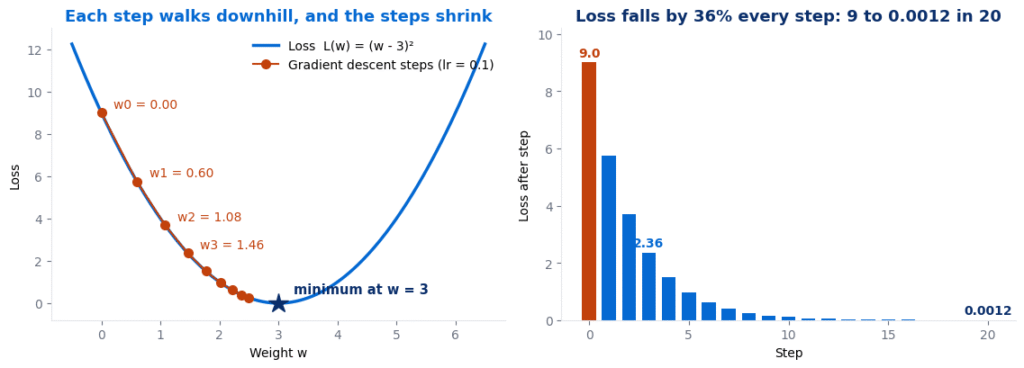
Gradient Descent Explained: 1 Simple Rule That Trains Models
Gradient descent trains a model by repeatedly stepping each weight downhill on the loss with w = w – lr * gradient, shown here by hand on a simple 1-D loss.
Loss functions, activation functions, metrics and the core concepts of how models learn.
Gradient descent trains a model by repeatedly stepping each weight downhill on the loss with w = w – lr * gradient, shown here by hand on a simple 1-D loss.
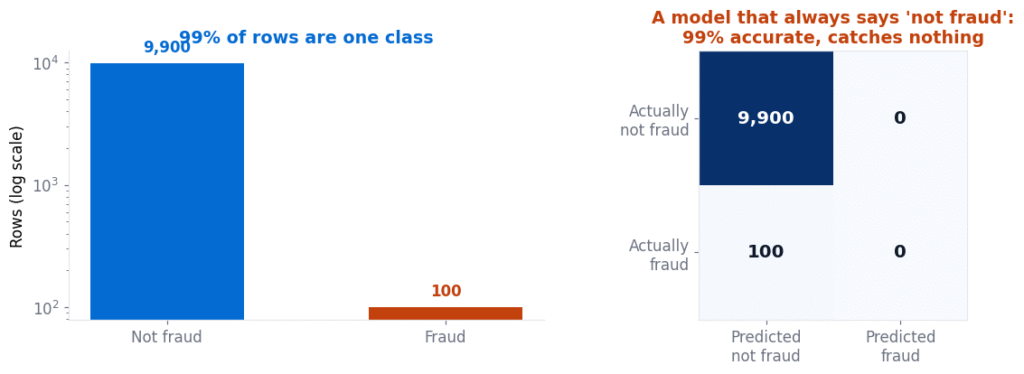
On imbalanced datasets a useless model scores 99%. Which metrics to use instead, why threshold tuning beats SMOTE, and how to resample without leaking.
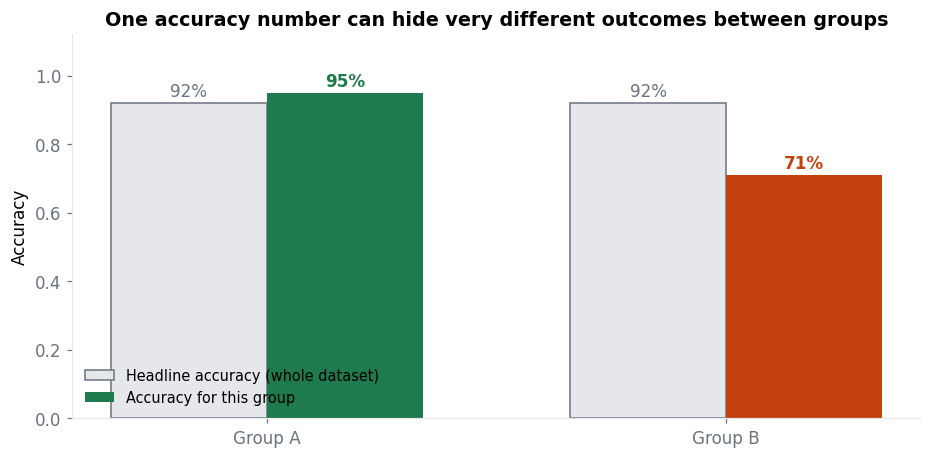
Bias in machine learning means worse results for some groups, hidden behind one accuracy number. Where it comes from, why deleting the column fails, and how to measure it.
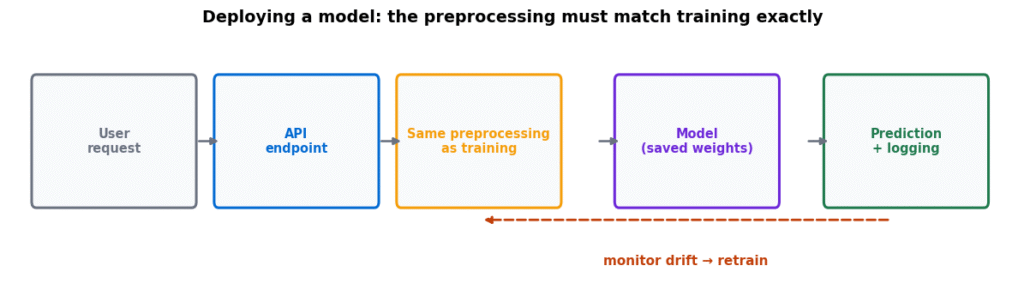
Deploying a model means matching training preprocessing exactly. Save the whole pipeline, validate inputs, log everything, and monitor for drift after launch.
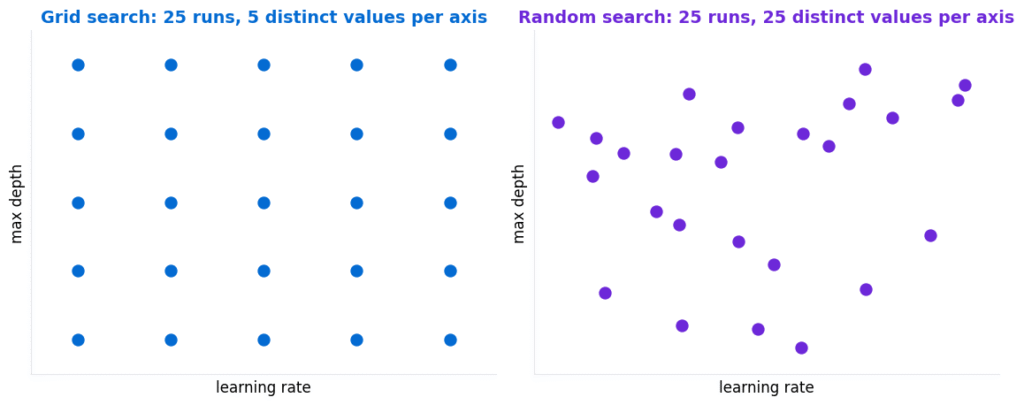
Hyperparameter tuning done properly: why random search beats grid search, which ranges need a log scale, and the mistake that makes your results meaningless.
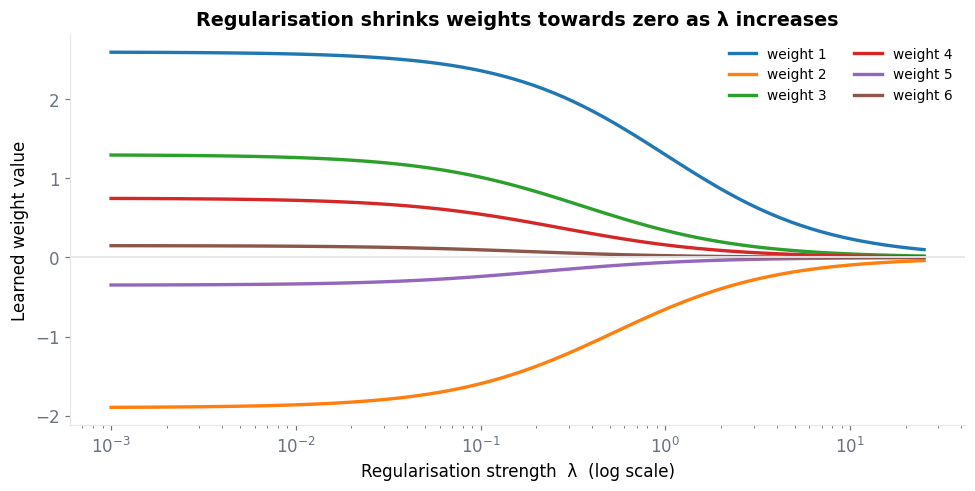
Regularisation charges a model for complexity. Why L2 shrinks weights smoothly, why only L1 reaches exactly zero, and how to tune lambda with cross-validation.
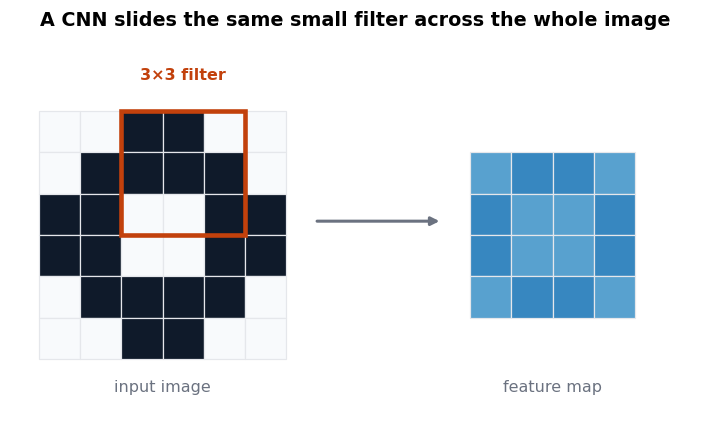
A convolutional neural network slides learned filters across an image. Parameter sharing, pooling, and why transfer learning matters more than architecture.
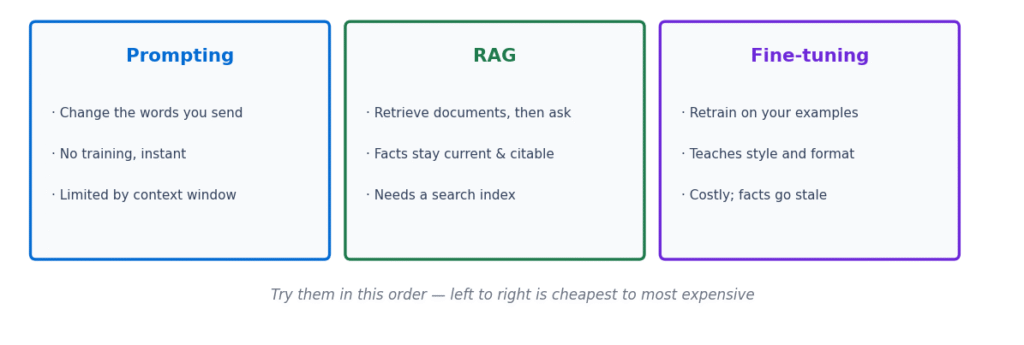
Prompting changes the input, RAG supplies documents, fine-tuning changes the weights. Which to use when, and why fine-tuning is the wrong way to add facts.
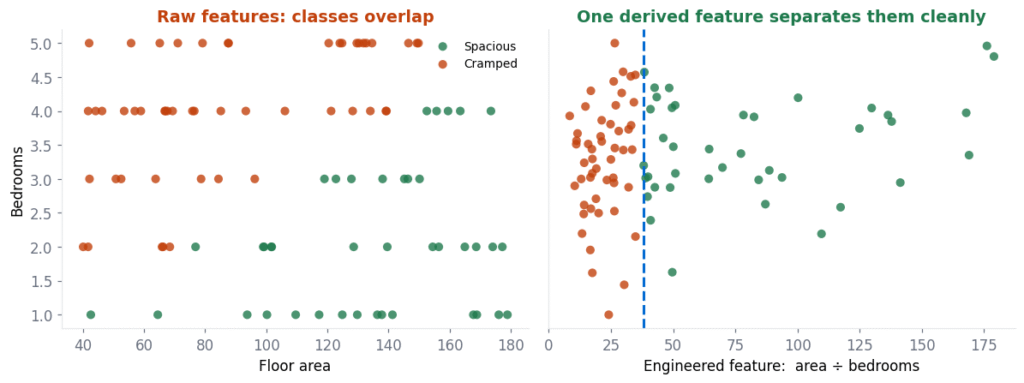
Feature engineering often beats a better algorithm. Ratios, date splitting, cyclical encoding and aggregations – plus the leakage trap that ruins results.
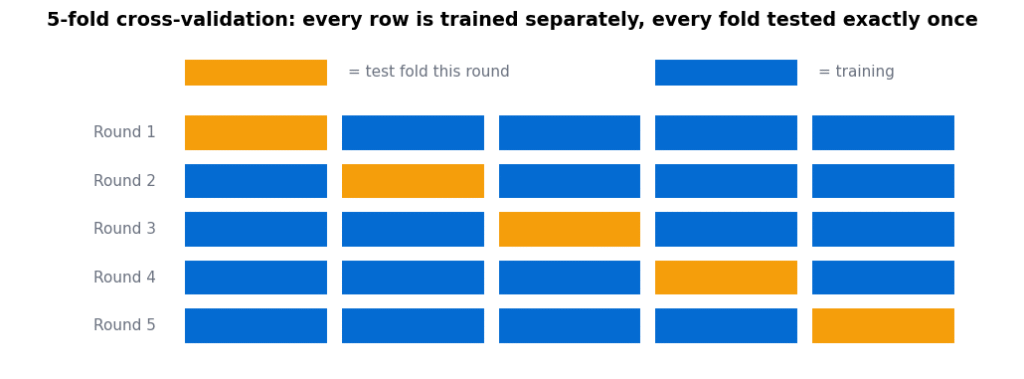
Cross-validation trains k times on different folds so one unlucky split cannot mislead you. Reading the spread, choosing the right variant, and avoiding leakage.