The sigmoid vs softmax choice decides your network’s output layer, and getting it wrong quietly breaks a classifier. The short version: sigmoid treats every class independently, while softmax makes the classes compete. This guide makes the sigmoid vs softmax difference concrete with a live calculator, a side-by-side table, and the exact rule for picking one.
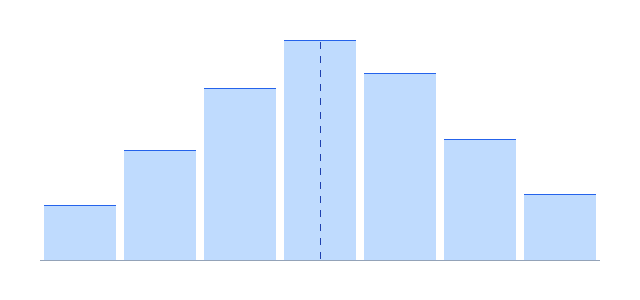
Try it: softmax in action
Softmax couples the classes so they compete and sum to 100%. Change the logits and watch — this coupling is the heart of the sigmoid vs softmax distinction.
Enter three logits (raw scores) — softmax turns them into probabilities that sum to 100%:
Sigmoid vs softmax in one sentence
The key difference
The sigmoid vs softmax question comes down to independence. Sigmoid squashes each output on its own, so several outputs can all be high at once — perfect when an image can be both “beach” and “sunset”. Softmax normalises across all outputs so they compete and sum to 1 — perfect when a digit is exactly one of 0–9.
Side-by-side comparison
| Aspect | Sigmoid | Softmax |
|---|---|---|
| Outputs sum to 1? | No | Yes |
| Classes compete? | Independent | Coupled |
| Use case | Binary, multi-label | Single-label multi-class |
| Typical loss | Binary cross-entropy | Categorical cross-entropy |
| Output neurons | 1 per label | 1 per class |
A useful fact
Choosing in Python (Keras)
# multi-label (independent) -> sigmoid
Dense(n_labels, activation="sigmoid")   # + binary_crossentropy

# single-label multi-class -> softmax
Dense(n_classes, activation="softmax")  # + categorical_crossentropy
Pick the loss to match: binary cross-entropy with sigmoid, categorical cross-entropy with softmax.
A quick sanity check
Before training, ask a single question about your labels: can more than one be true for the same example at once? If yes — several tags on a photo, multiple symptoms for a patient — the independent option is correct. If exactly one label applies, the competing option is correct. Matching the loss is just as important as matching the activation: pair the independent choice with binary cross-entropy and the competing choice with categorical cross-entropy, because a mismatched loss will train a technically-valid but poorly-calibrated model. It also helps to think about how you will read the output at inference time — independent scores each need their own threshold, whereas a competing distribution is usually read with a single arg-max. A final practical note: if your classes are mutually exclusive but you accidentally train with the independent setup, the model will still produce numbers, but they will not sum to one and the confidences will be poorly calibrated, which is a subtle bug that is easy to miss in a quick evaluation. The Wikipedia multiclass classification article covers the broader landscape of single- versus multi-label tasks.
Related activation functions
- Activation Functions — the complete guide (hub).
- Sigmoid Function — the independent gate.
- Softmax Function — the competing gate.
- Classification Metrics — scoring either one.