If you want to understand machine learning, you have to make peace with statistics first. This guide to statistics for machine learning walks you through the handful of ideas that actually run every model — in plain English, with free calculators to play with as you go.
Most people try to learn ML by jumping straight to neural networks, then quietly drown because the foundations were never there. The truth is less intimidating: the statistics for machine learning you genuinely need fits into four areas, and once they click, the rest of the field stops feeling like magic. This page is the map; each link goes to a short, beginner-friendly explainer (and a calculator).
What you’ll learn
- The four areas of statistics that machine learning actually depends on.
- How each one shows up in real models — scaling, evaluation, uncertainty.
- A clear reading order, each with a free calculator to build intuition.
Why statistics matters for machine learning
Machine learning is, at its core, applied statistics with a lot of computing power. Models learn patterns from data, and statistics is the language we use to describe data, measure uncertainty, and decide whether a result is real or just noise. Skip it and you get the classic beginner trap: a model that looks brilliant in training and falls apart on new data. Learn it and you can debug, trust, and improve what you build.
1. Describing data: centre and spread
Before a model touches your data, you describe it. The centre is the average — see what the mean is and how it compares in mean vs median. The spread is how scattered the values are: start with variance vs standard deviation, then the interquartile range and kurtosis. Try them in the standard deviation calculator, variance calculator, mean calculator and median calculator.
2. Distributions: the shapes data takes
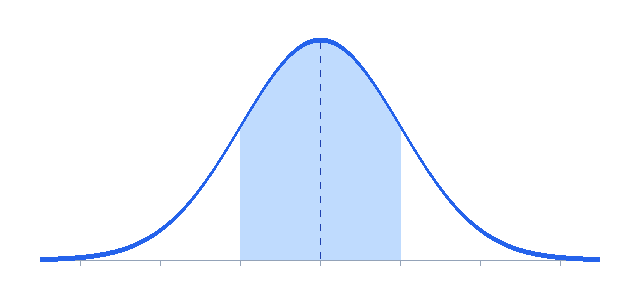
Data clusters into recognisable shapes, and the most important is the bell curve. Learn the central limit theorem (why averages go normal), the law of large numbers, the sampling distribution, and the Poisson distribution for counts. Calculators: normal distribution, z-score and Poisson.
3. Probability & expectation
Models output probabilities, so you need the basics: conditional probability and expected value. Build intuition with the probability calculator.
4. Inference: from sample to conclusion
Finally, statistics for machine learning is about drawing trustworthy conclusions from limited data. Learn the t-test, degrees of freedom, and regression analysis — the same ideas behind your model’s first algorithm, linear regression. Calculators: confidence interval, p-value and linear regression.
The complete reading order
| # | Topic | Why it matters in ML |
|---|---|---|
| 1 | Variance vs standard deviation | Feature scaling, spread |
| 2 | Interquartile range | Robust spread, outliers |
| 3 | Central limit theorem | Why the normal curve is everywhere |
| 4 | Conditional probability | Bayes, classifiers |
| 5 | Regression analysis | Your first ML model |
| 6 | Degrees of freedom | Tests, model complexity |
🤖 ML insight
Every preprocessing step, loss function and evaluation metric in machine learning is statistics in disguise. Standardisation is a z-score; a loss is an expectation; cross-validation reports a mean ± standard deviation. Learn the statistics once and it pays off across the entire field.
Where to go next
This is the statistics half of the math behind ML. When you’re ready, continue with the other pillars — linear algebra for machine learning and calculus — and keep the machine learning for beginners guide handy. For the formal definitions, the statistics reference and machine learning reference are solid starting points.
Frequently asked questions
How much statistics do I need for machine learning?
Do I need statistics or calculus first?
What’s the single most important statistic in ML?
Is this statistics for machine learning guide free?
Statistics for machine learning: summary
Master these four areas and you’ll have the statistics for machine learning that 90% of practitioners actually use day to day. Work through the explainers above, play with each calculator, and the rest of machine learning will start to feel a lot less like magic.